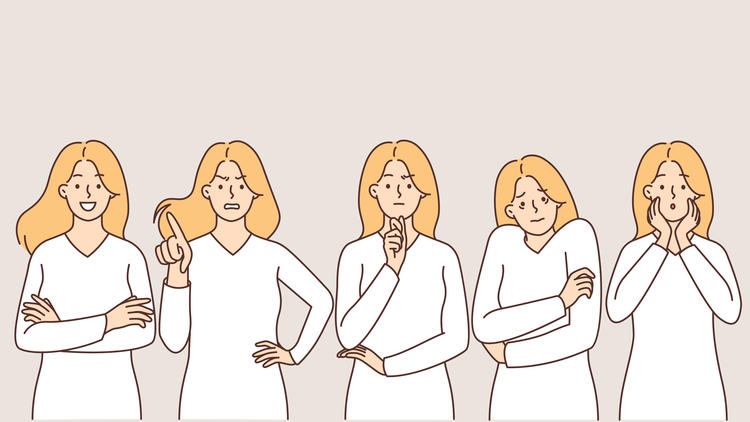
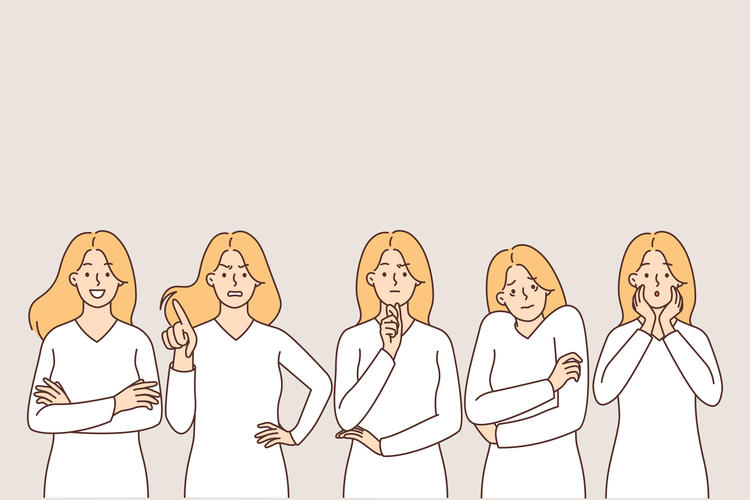
Have you ever had that moment when someone's emotions did a complete 180 (e.g., when suddenly someone who seemed perfectly happy got upset), catching you off guard? There is some science behind why we find these emotional plot twists surprising. Researchers have uncovered two reasons why we might find such a shift surprising: first, adults’ emotions tend to follow predictable emotional patterns most of the time, and second, we are pretty good at guessing how someone is likely to feel next (Thornton & Tamir, 2017). This emotional clairvoyance helps us navigate our daily lives and smoothly interact with others.
But how do little ones develop this emotion-predicting superpower?
In this study, we showed babies videos of changes in emotion - for example, an actor smiling at the start of the video and pouting by the end. Some videos showed more common transitions, such as sadness turning to anger, whereas other sequences, such as happiness turning to anger, were less common.
By recording subtle changes in how babies' pupils responded to these videos, we found that they could tell which emotions were likely to follow each other and which were not. This means that even very young babies already know something about how people move between emotions!
How did they learn this pattern? When we asked parents about their emotional sequences, babies whose parents had similar emotional patterns reacted similarly to the videos in the lab. This means babies may learn about emotions from the adults they spend the most time with - their parents!
Researchers: Mira Nencheva, Richard Peng, Diana Tamir, & Casey Lew-Williams