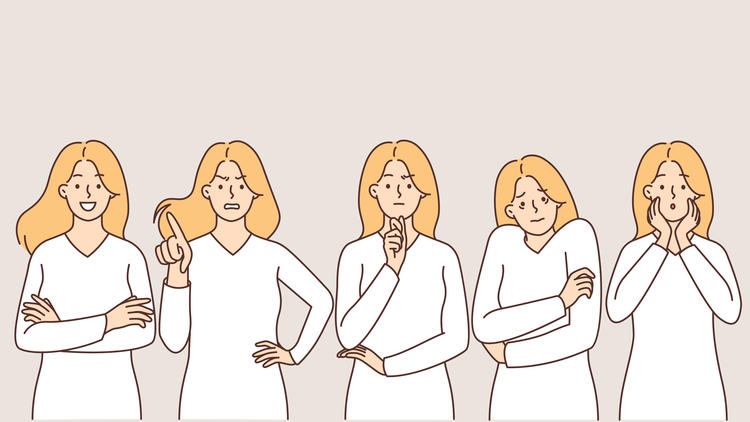

During interactions with infants and toddlers, caregivers use many different communicative cues, including speech, acting on objects, gesturing, exaggerating their facial expressions to convey emotion, and using child-directed touch. These cues seem to support learning by both engaging attention and directing attention to important features of the environment. However, most research about natural communication comes from single play interactions. We were interested in how variable or predictable caregivers are in their use of these cues, from day to day and across activity contexts.
To learn more, we recorded caregivers and toddlers engaged in three different activity contexts (playtime, mealtime, and booksharing) on two different days. Across both days and all three activity contexts, caregivers used a lot of multimodal communication. However, there was variability in how much they used each type of cue. For example, as you might expect, caregivers talk a lot more when they’re reading books. They also seem to gesture more during booksharing and act on objects less.
We also found that, within an activity context, caregivers communicate in similar ways from day to day (e.g., caregivers who use a lot of gesture during book sharing on one day tend to do that when they read books the next day, too). However, caregivers use communicative cues differently across activity contexts (e.g., the way that they use multimodal cues to communicate during booksharing differs from how multimodal cues are used during playtime and mealtime).
There is not a single “right” way to communicate with a child, but some research suggests that having predictable input may be helpful. Our research suggests that, even without consciously trying, many caregivers unintentionally provide this sort of predictability. Just the fact that toddlers engage in different activities throughout the day, and that caregivers’ communication is shaped by these activities, may generate predictability in toddlers’ everyday input that, in turn, supports learning.
Researchers: Jessica E. Kosie & Casey Lew-Williams