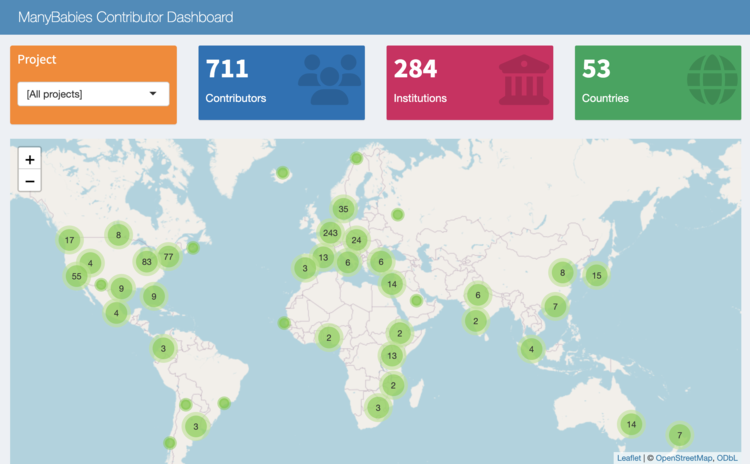
Last year, the Princeton Baby lab joined with over 200 institutions from over 50 countries to study infant development around the world. The team effort is called ManyBabies, and the goal is simple: to get a better picture of how infants develop and learn, we need to join forces to conduct the same studies around the world.
One of the studies that the Princeton Baby Lab participated in looked at how infants (ages 5-12 months) learn new rules in their language. Language is full of patterns. For example, in English, one pattern is that the subject of a sentence typically comes before the verb. Somehow, every English learner figures out this pattern, even if they are never explicitly told it exists. How sensitive are infants to patterns in languages that they hear, even before the age of one?
To test this question, the ManyBabies team devised an “alien” language with a systematic rule embedded in it. We make up “alien” languages like this to test infants’ learning because we want to be sure that they have never heard this specific language or rule before. We then give infants an opportunity to listen to the alien language. After about 2 minutes, we test whether they have already begun to pick up on the rule. We do this by measuring how surprised they are to hear language snippets that violate the rule they just heard.
So far, the ManyBabies community has collected data from thousands of infants from around the world (including a number of infants participating here in Princeton). Projects like these will help us understand more about how all infants learn their first languages. Stay tuned for the results!
Labs from around the world contributing to the ManyBabies rule learning study. Figure courtesy of https://manybabies.org/
Researchers: Martin Zettersten & Casey Lew-Williams